Charleston, South Carolina, is a city where the whispers of history wind down cobblestone streets and rustle the leaves of stately Southern live oaks. Amidst the lazy, humid heat of a summer afternoon, the gentle clip-clop of horse hooves precedes the creaking wheels of 18th-century carriages, just as they did more than 250 years ago.
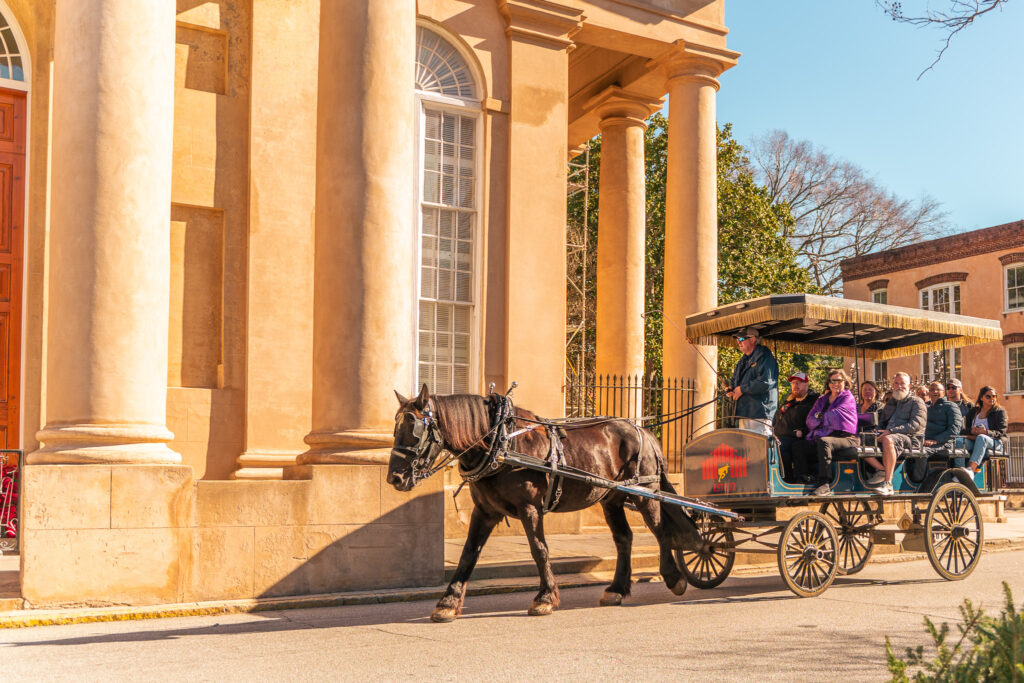
For generations, horse-drawn carriages have been an integral part of Charleston’s charm while serving various transportation, labor, and tourist roles. Today, Palmetto Carriage Works reinforces the city’s long relationship with horse-drawn buggies for guests, particularly since they offer an authentic glimpse into the molded architecture and cultural milieu of Charleston. As the oldest carriage company in operation throughout the city, Palmetto Carriage Works keeps alive a longstanding tradition that honors the past, showcases the surroundings, and embraces the magnificent animals that have pulled their weight around Charleston for decades. Here’s a brief breakdown of the history of horse-drawn carriages in Charleston.
The Dawn of the Carriage Era: Colonial Charleston
Since its founding in 1670, Charleston’s urban landscape has been undeniably shaped by the needs of its early inhabitants and their primary mode of transport: horses. In colonial Charleston, streets were intentionally designed to facilitate the safe mobility of pedestrians and slow-moving, horse-drawn vehicles. Unlike modern cities built for rapid automobile traffic, Charleston’s early pathways were narrow and, often, unpaved. The compact nature of the peninsular city meant that most destinations were typically walkable, but when it came to making longer journeys or transporting large loads, horse-drawn carts, wagons, and carriages were indispensable.
From the delivery of goods to the leisurely rides of the affluent, horses were integral to the city’s functioning. Wealthy members of society rode saddle horses or utilized various horse-drawn conveyances like chairs, chaises, and four-wheeled carriages. These symbols of prestige and social standing insulated high-class households from the smell and crowds of the street. In contrast, laborers relied on carts and drays to transport essential goods like firewood, bricks, rum, and beer across the bustling town. As early as 1750, concerns about public safety led to the implementation of speed limits for horse-drawn vehicles. This relatively early need for regulation highlights the constant presence and evolving role of horse-drawn transport in the daily life of Charleston’s residents.
Horse-Drawn Railways: Public Transport in the 19th Century
The 19th century saw horse-drawn transportation move beyond individual ownership to more organized public services. After the Civil War, Charleston introduced its first horse-drawn street railway system. Tracks were laid, and the Charleston City Railway officially opened for business. At its peak, the railway operated 39 horsecars on about 18 miles of track with a stable of 144 horses and one mule. Specifically engineered to maximize passenger capacity, these horse-drawn cars resembled elongated carriages that prioritized efficiency and comfort for riders.
This new public transport system facilitated faster commutes, which in turn fostered urban expansion. Burgeoning neighborhoods were now connected with commercial centers and waterfronts. Large draft horses and mules, known for their strength and endurance, became the backbone of this evolving transportation network as they pulled heavy carts, drays, and passenger vehicles through thoroughfares. The steady clatter of hooves and the rumble of horsecars became a familiar soundtrack to daily life and signified Charleston’s transformation into a fast-paced, technologically modern city.
From Hooves to Horsepower: The Dawn of the 20th Century
Introduced in the late 1890s, electric streetcars offered a faster and more efficient alternative to their horse-drawn predecessors. Electric streetcars could travel at significantly higher speeds and make distant parts of the city more accessible. They were capable of carrying far more passengers per trip, which reduced congestion on busy routes. Finally, they eliminated the considerable logistical challenges and costs associated with maintaining large stables of horses. The noise and odor of horse-drawn traffic—once a ubiquitous part of city living—began to recede and was replaced by the hum and clang of the electric trolley.
The arrival of the first gasoline-powered automobile in Charleston further signaled the coming end of the “Carriage Era.” Though initially a luxury item for the wealthy, the automobile’s presence on Charleston’s streets offered a tantalizing glimpse into a future unconstrained by fodder, stable hands, and the natural limitations of animal endurance. Roads previously designed for slower, hoofed traffic began to be adapted for faster, heavier wheeled conveyances. Parking regulations, traffic signals, and fueling stations slowly but surely replaced hitching posts and watering troughs as common urban fixtures. By 1938, buses had entirely replaced streetcars, which marked the official conclusion of horse-drawn public transportation in Charleston.
Horse-Drawn Carriages Get A Second Act: The Rise of Modern Tourism
The arrival of the automobile didn’t spell the end for horse-drawn carriages in Charleston. Instead, these elegant conveyances underwent a transformation from essential modes of transportation to a cherished novelty for history lovers, animal enthusiasts, and tourists. This shift was a natural fit for Charleston, particularly due to its meticulously preserved history and the common desire of visitors to get an authentic glimpse into its past.
As early as the 1940s, businesses began charging a modest 50 cents for casual horse and carriage tours from The Battery. Charleston’s narrow streets, magnificent architecture, and beautiful surroundings allowed riders to experience the city at a more leisurely pace, akin to how its early inhabitants would have navigated it. The gentle clip-clop of hooves created a romantic, evocative journey through time that allowed guests to fully absorb the intricate details of historic homes, hidden gardens, and significant landmarks.
Guided Carriage Tours: Palmetto Carriage Works
In 1972, Palmetto Carriage Works was born, which gradually became the oldest and most prominent horse-drawn carriage tour company in the city. Located at the iconic “Big Red Barn” on Guignard Street, Palmetto Carriage Works has served as a cornerstone of Charleston’s tourism for over five decades. With a blend of history, humor, and Southern charm imbued into every tour, licensed and Palmetto Guild Certified guides lead visitors through approximately 25–30 blocks of the historic district, showcasing stunning 18th and 19th-century architecture, beautiful gardens, churches, and significant landmarks
Horse-drawn carriages in Charleston are a testament to the city’s adaptability and enduring spirit. Palmetto Carriage Works is proud to preserve this legacy while championing the welfare of the animals that make these journeys possible. To experience this long-standing tradition for yourself, book a guided tour with Palmetto Carriage Works today!